
 English
 Spanish
 French
 German
 Italian
 Chinese (Simplified)
 Japanese
 Korean
 Arabic
 Portuguese



 Send Inquiry
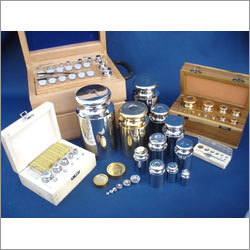
E2 Class Calibration Weight
Price 50000 INR/ Number
E2 Class Calibration Weight Specification
- Function
- Mass Calibration
- Features
- Mirror Polished, Dust Proof, ISO Certified
- Size
- 1 mg to 100 g (various sizes in set)
- Automatic Grade
- Manual
- IP Rating
- Not Rated
- Application
- Calibration of Analytical Balances and Laboratory Equipment
- Usage
- Weight Calibration, Laboratory Standardization
- Product Type
- E2 Class Calibration Weight
- Weighing Scale Type
- Calibration Weight
- Material
- Stainless Steel
- Load
- Up to class-defined limits
- Accuracy
- E2 Class (very high precision)
- Capacity Range
- 1 mg to 100 g (sets may vary)
- Color
- Silver
- Shape
- Cylindrical (larger weights), Wire/Leaf (smaller values)
- Handling Tool
- Tweezers or gloves required for use
- Density
- 7.9-8.0 g/cm³
- Box Type
- Supplied in protective box/case
- Construction
- One-piece construction
- Compliance
- OIML R111, ISO 17025
- Magnetic Susceptibility
- Low, as per OIML R111 standards
- Corrosion Resistance
- High
- Surface Finish
- Highly Polished
E2 Class Calibration Weight Trade Information
- Minimum Order Quantity
- 1 Number
- FOB Port
- North East Delhi
- Payment Terms
- Cash Advance (CA), Cash in Advance (CID)
- Supply Ability
- 2 Per Week
- Delivery Time
- 2 Week
- Main Domestic Market
- All India
About E2 Class Calibration Weight
We are offering Calibration Weights of High Accuracy with NABL Certificates. Specification- Material: Stainless steel
- Density 5.96gcm2
- Packaging Details: Aluminum box
- Class E1E2 weights
- Mass Standard - Class E 1E2
- In accordance with OIML R 111
High-Precision Laboratory Calibration Standard
Manufactured according to E2 Class and OIML R111 requirements, these highly polished stainless steel calibration weights deliver remarkable accuracy and consistency. Used extensively for calibrating analytical balances and laboratory instruments, their density (7.9-8.0 g/cm3) and low magnetic susceptibility guarantee reliable performance in even the most sensitive applications.
Robust Construction and Reliable Performance
Each weight is produced as a one-piece construction, ensuring stability and long-lasting accuracy. The mirror-polished surface increases corrosion resistance, facilitating easy cleaning and minimal particle adherence, which is crucial for laboratory environments. Their protective case provides secure storage and effortless organization.
Compliant and Versatile for Diverse Applications
The weights meet OIML R111 and ISO 17025 standards, ensuring international compliance for calibration laboratories. Tweezers or gloves are recommended for handling to prevent contamination, thus preserving their accuracy. With a capacity range from 1 mg to 100 g, these sets cater to various calibration, standardization, and quality assurance tasks across different laboratory settings.
FAQ's of E2 Class Calibration Weight:
Q: How are E2 Class Calibration Weights used in laboratory calibration processes?
A: E2 Class Calibration Weights are used to verify and calibrate high-precision analytical balances and laboratory scales. Their high accuracy and compliance with OIML R111 and ISO 17025 standards make them indispensable for achieving reliable calibration results in laboratory settings.Q: What benefits does the highly polished, one-piece stainless steel construction offer?
A: The mirror-polished, one-piece stainless steel construction provides superior corrosion resistance and minimizes contamination. This enhances the longevity and accuracy of the weights, ensuring dependable results for critical laboratory measurements.Q: When should E2 Class Calibration Weights be used over lower class weights?
A: E2 Class Calibration Weights are recommended when extremely high precision is required, such as in analytical laboratories or during the calibration of microbalances. Their very low tolerances make them ideal for applications demanding the highest measurement accuracy.Q: Where are these calibration weights typically stored and how are they protected?
A: Each weight is supplied in a protective box or case, which is dust-proof and designed to prevent damage or contamination while not in use. Proper storage helps maintain their accuracy and ensures they are ready for precise calibration whenever needed.Q: What is the correct process for handling these weights to maintain their integrity?
A: Always use non-magnetic tweezers or gloves when handling E2 Class Calibration Weights. Direct contact with hands can transfer oils or dirt, potentially affecting their mass and calibration accuracy.Q: How does compliance with OIML R111 and ISO 17025 benefit users?
A: Compliance with OIML R111 and ISO 17025 ensures that the weights meet strict international standards for mass, traceability, and quality. This provides confidence in calibration results and is required for accredited laboratory operations.Q: What types of applications are these calibration weights suitable for?
A: These weights are ideal for calibrating analytical balances, laboratory scales, and other precision instruments. Their accuracy and standardization make them suitable for laboratory standardization, quality control, and mass calibration tasks in scientific, industrial, and commercial settings.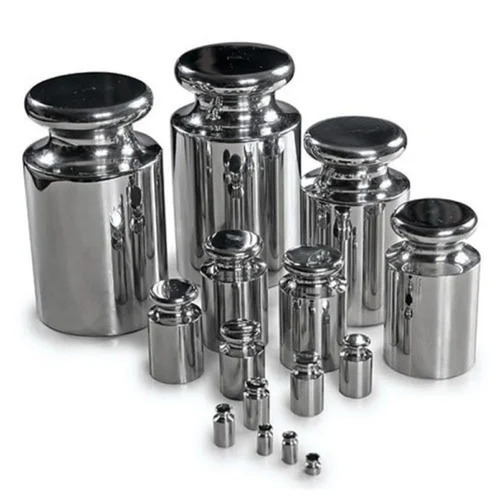

Price:
- 50
- 100
- 200
- 250
- 500
- 1000+

More Products in Precision Weights Category
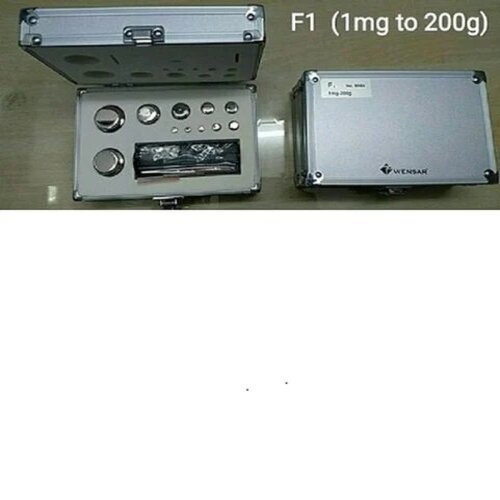
wooden calibration weight box
Price 12500.0 INR / Number
Minimum Order Quantity : 1 Number
Weighing Scale Type : Other, Standard Calibration Weights
Color : Natural Wood Finish
Material : Other, Wooden Box with Stainless Steel/Brass Weights
Capacity Range : 1 mg to 200 g / 1 mg to 500 g / 1 mg to 1 kg (depends on set type)
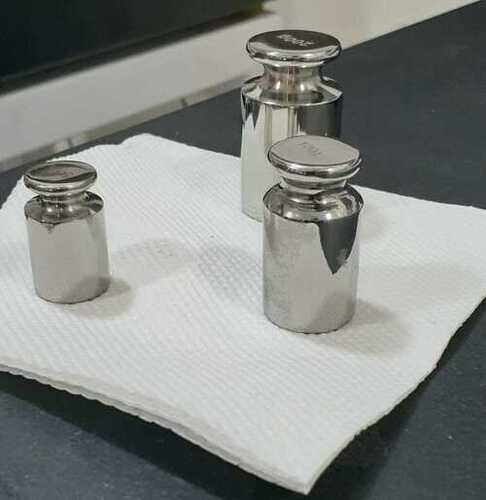
Stainless Steel Weights
Price 10000 INR
Minimum Order Quantity : 1 Kilograms
Weighing Scale Type : Laboratory Balance
Color : Silver
Material : Other
Capacity Range : 1 mg to 20 kg
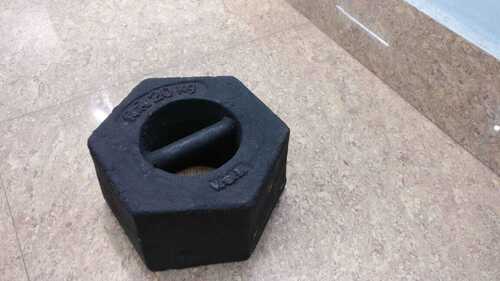
Black Measuring Weights
Price 1600 INR / Number
Minimum Order Quantity : 20
Weighing Scale Type : Other, Standard Weighing Weights
Color : Black
Material : Other, Cast Iron
Capacity Range : 1 kg to 20 kg
Laboratory Weights
Price 15000 INR / Unit
Minimum Order Quantity : 1 Unit
Weighing Scale Type : Laboratory Balance
Color : Silver
Material : Other
Capacity Range : 1 mg to 500 g

GST : 07AGQPG8382B1Z8
 Send Inquiry




 |
SWASTIK SYSTEMS & SERVICES
All Rights Reserved.(Terms of Use) Developed and Managed by Infocom Network Private Limited. |
