
 English
 Spanish
 French
 German
 Italian
 Chinese (Simplified)
 Japanese
 Korean
 Arabic
 Portuguese


 Send Inquiry
NABL accredited Weights
NABL accredited Weights Specification
- Features
- Corrosion resistant, Individually marked, Supplied with NABL Calibration Certificate
- Max Height
- Varies with Weight Specification
- Number of Specimens
- As per Weight Set
- Hardness
- As per Material Standard
- Application
- Calibration & Verification of Weighing Balances
- Resolution
- As per Nominal Value
- Automation Grade
- Manual
- Humidity
- 10%80% RH
- Test Range
- 1 mg to 20 kg (Typical Sets)
- Specimen Size
- Dependent on Nominal Value
- Measuring Range
- 1 mg to 20 kg
- Equipment Type
- NABL Accredited Laboratory Standard Weights
- Mounting Type
- Free Standing / Boxed
- Accuracy
- As per OIML R111-1 Class (E1, E2, F1, F2, M1, M2, M3)
- Temperature
- 18C to 28C (Storage and Use)
- Response Time
- Immediate
- Usage
- Industrial & Laboratory Calibration
- Capacity
- 1 mg to 20 kg
- Machine Weight
- Varies based on Class and Weight Set
- Control Mode
- Manual
- Recalibration Interval
- 1 year as per standard practice
- Calibration
- Supplied with valid NABL accredited certificate traceable to national standards
- Marking
- Laser Engraved/Stamped Nominal Value & Class
- Protective Case
- Individual fitted box (aluminum/wooden/plastic)
- Shelf Life
- Unlimited with proper care
- Compliance
- OIML R111-1, NABL, ISO 17025
- Material
- Stainless Steel (AISI 304/316), Optional Brass/Iron for higher denominations
- Surface Finish
- Mirror Polished (SS), Painted/Plated (Brass/Iron)
- Standard Accessories
- Gloves, forceps, dust brush (as applicable)
- OIML Class
- E1, E2, F1, F2, M1, M2, M3 available
NABL accredited Weights Trade Information
- Minimum Order Quantity
- 1 Unit
- Supply Ability
- Unit
- Delivery Time
- Days
About NABL accredited Weights
NABL accredited Weights
The carat, the standard unit of weight for diamonds and other gemstones,takes its name from the carob seed. Because these small seeds had affirly uniform weight, early gem traders used them as counter weights in their balance scales. The modern metric carat, equal to 0.2 grams,was adopted by the United States in 1913 and other countries soon after. Today, a carat weighs exactly the same in every corner of the world.
Superior Accuracy and Certification
These laboratory weights are manufactured according to stringent OIML R111-1 class requirements and come with an NABL-accredited calibration certificate, affirming their traceability and reliability for crucial calibration processes. Their high accuracy makes them ideal for laboratory balances and critical industrial applications. The weights meet national and international standards, guaranteeing consistent performance.
Comprehensive Protection and Durability
Each weight is housed in a customized fitted box, either aluminum, wood, or plastic, alongside essential accessories like gloves, forceps, and dust brushes. The polished or plated finishes enhance corrosion resistance, while laser-engraved or stamped markings ensure durability. When properly cared for, these weights offer unlimited shelf life, maintaining their precision for years.
Versatile Applications and Easy Handling
These weights are designed for a wide variety of calibration and verification tasks in both laboratories and industrial environments. With a diverse range of classes and nominal values, users can select the most suitable set for their weighing requirements. The free-standing or boxed design allows for flexible use, and each weight's immediate response time ensures efficient calibration processes.
FAQ's of NABL accredited Weights:
Q: How are NABL accredited weights calibrated and certified?
A: Each weight is calibrated using traceable methods in a NABL-accredited laboratory and is supplied with a valid certificate that ensures compliance with national and international standards such as OIML R111-1 and ISO 17025.Q: What materials are used to manufacture these laboratory weights?
A: Depending on the desired class and specification, the weights are made from steel, brass, or iron with either a mirror-polished or painted/plated finish for enhanced corrosion resistance.Q: When should I recalibrate my NABL accredited weights?
A: It is recommended to recalibrate these weights every 1 year to ensure continued accuracy, as per standard laboratory practice and industry guidelines.Q: Where can these weights be used?
A: These weights are suitable for use in laboratories and industrial settings across India for the calibration and verification of weighing balances with a measuring range from 1 mg up to 20 kg.Q: What is the process for handling and storing these weights?
A: The weights should be handled with the provided gloves and forceps, cleaned with the dust brush, and stored in their individual fitted cases to prevent contamination and damage, ensuring long-term accuracy and shelf life.Q: How do the different OIML classes (E1, E2, F1, etc.) affect usage?
A: The OIML class determines the accuracy and tolerance of the weights, with E1 and E2 intended for highly precise laboratory calibrations, and F1 through M3 for more general industrial applications and varying degrees of resolution.Q: What are the benefits of using NABL accredited weights in calibrations?
A: Utilizing NABL accredited weights ensures accurate, reliable calibration results, traceability to national standards, and compliance with regulatory requirements, thereby enhancing the credibility of laboratory and industrial measurements.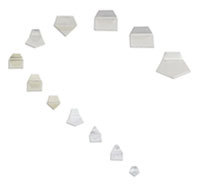

Price:
- 50
- 100
- 200
- 250
- 500
- 1000+

More Products in Laboratory Scale Category
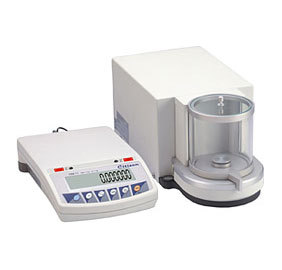
Laboratory Balance
Price 17000 INR
Minimum Order Quantity : 10 Units
Usage : Laboratory Weighing
Temperature : 10C 40C
Accuracy : 0.001 g
Response Time : ~2 seconds
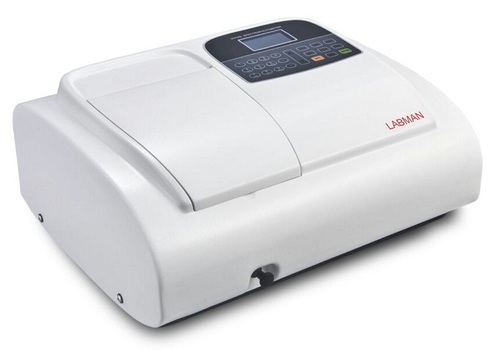
Digital Spectrophotometer
Price 255000 INR / Unit
Minimum Order Quantity : 1 Unit
Usage : Laboratory, analytical, research purposes
Temperature : Room Temperature (10C to 40C)
Accuracy : 0.01 Abs
Response Time : 1 second
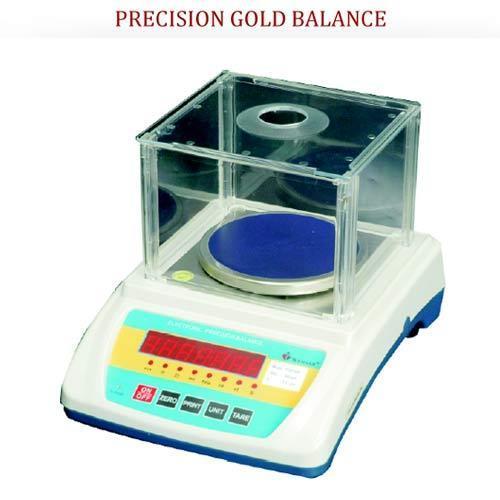
Laboratory Balance
Price 15000 INR / Unit
Minimum Order Quantity : 1 Unit
Usage : Laboratory sample measurement
Temperature : 10C to 40C
Accuracy : 0.0001 g
Response Time : 3 seconds
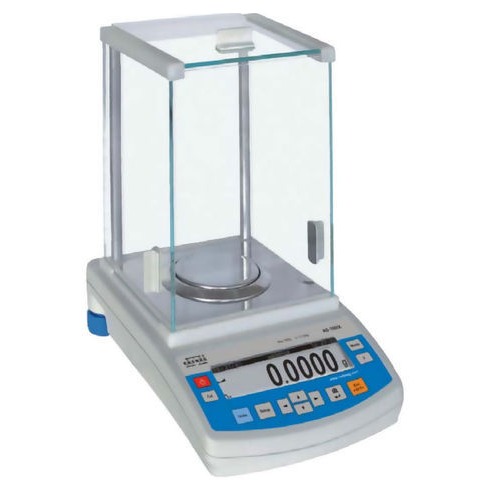
Laboratory Micro Balance
Price 100000 INR
Minimum Order Quantity : 1 Unit
Usage : Chemical/Pharmaceutical/Research Labs
Temperature : 10C to 40C operating
Accuracy : 0.02mg
Response Time : 35 seconds

GST : 07AGQPG8382B1Z8
 Send Inquiry



 |
SWASTIK SYSTEMS & SERVICES
All Rights Reserved.(Terms of Use) Developed and Managed by Infocom Network Private Limited. |
