
 English
 Spanish
 French
 German
 Italian
 Chinese (Simplified)
 Japanese
 Korean
 Arabic
 Portuguese



 Send Inquiry
Stainless Steel Calibration Weight
Price 20000 INR/ Unit
Stainless Steel Calibration Weight Specification
- Accuracy
- Class E1, E2, F1, F2, M1, M2 as per OIML R-111
- Max Height
- As per standard weight dimensions
- Measuring Range
- As per selected weight (1 mg to 20 kg)
- Resolution
- Depends on weight class
- Equipment Type
- Stainless Steel Calibration Weight
- Automation Grade
- Manual
- Features
- Rustproof, Non-magnetic, High precision, Polished finish
- Mounting Type
- Free standing or handled
- Application
- Calibration of laboratory balances, scales, and precision weighing instruments
- Usage
- Laboratory, Research, Industrial calibration
- Capacity
- 1 mg to 20 kg (various weights available)
- Marking
- Laser engraved for identification
- Corrosion Resistance
- Yes
- Material
- Stainless Steel
- Surface
- Smooth, burr-free
- Pack Type
- Supplied with or without box
- Finish
- Mirror polished
- Tolerance
- As per OIML R-111 standards
- Shape
- Cylindrical or knob-style (depending on model)
- Class
- E1, E2, F1, F2, M1, M2 as per requirement
Stainless Steel Calibration Weight Trade Information
- Minimum Order Quantity
- 10 Units
- Supply Ability
- Unit
- Delivery Time
- Days
- Main Domestic Market
- All India
Stainless Steel Calibration Weight About
Stainless Steel Calibration Weight
OIML recommended the above vide R-47 Edition 1979(E), for calibration and testing the accuracy of high capacity weighing scales and truck weighbridges. Cast Iron Rectangular Standard Weights from 100 kg, 200 kg,500 kg, 1000 kg, 2000 kg, and 5000 kg. These can be stacked conventionally and re-verified or re-adjusted periodically. The control mark as required by law is placed by the seal after adjustment of the weight at the adjusting cavity. All the weight shave the handle on the top for easy lifting.
Exceptional Accuracy for Precise Calibration
Designed in compliance with rigorous OIML R-111 standards, these stainless steel calibration weights guarantee meticulous accuracy for calibrating laboratory balances and industrial scales. Their high-grade steel composition and mirror-polished finish assure not only precision but also durability and corrosion resistance, making them ideal for demanding environments.
Versatile Design and Reliable Identification
Choose from a variety of weight classes (E1 to M2) and styles-cylindrical or knob-style-to suit any calibration need. Each weight features clear laser-engraved markings for easy and unmistakable identification. Models are available with or without storage boxes, ensuring flexibility for transportation and storage.
Ideal for Diverse Professional Applications
Whether you're working in laboratories, research facilities, manufacturing plants, or calibration labs, these weights provide the dependability and exactitude required. Their rustproof, non-magnetic properties, combined with a smooth, burr-free surface, ensure safe and consistent use in various professional settings across India.
FAQ's of Stainless Steel Calibration Weight:
Q: How are these stainless steel calibration weights used in calibration processes?
A: These weights are placed on laboratory balances or industrial scales to verify and adjust their accuracy according to the required standards. Their precise mass, determined by the OIML R-111 class, ensures that weighing instruments meet calibration requirements.Q: What is the benefit of the mirror-polished, corrosion-resistant surface?
A: The mirror-polished surface not only provides an aesthetically pleasing finish but also enhances rust resistance and prevents contamination. This ensures long-term durability and maintains each weight's accuracy, especially in humid or chemically active environments.Q: When should I select weights of a specific class (E1, E2, F1, etc.)?
A: Select the weight class based on the accuracy requirement of your weighing application. E1 and E2 are suited for highly precise laboratory balances, while F1, F2, M1, and M2 are commonly used for industrial or research equipment where a wider tolerance is acceptable.Q: Where are these calibration weights typically used?
A: These calibration weights are widely applied in laboratories, research facilities, pharmaceutical industries, industrial settings, and any location where precision weighing instruments require routine calibration to maintain accuracy and compliance.Q: What is the process for identifying each calibration weight?
A: Each calibration weight is laser engraved with specific identification marks, including weight and class. This guarantees precise traceability and prevents mix-ups, making it simple to select the appropriate weight for your calibration tasks.Q: How does the pack type (with or without box) impact storage and transport?
A: Weights supplied with storage boxes are better protected during transport and when not in use, reducing the risk of damage and preserving their calibration integrity. However, weights can also be supplied without boxes for permanent installations or immediate use.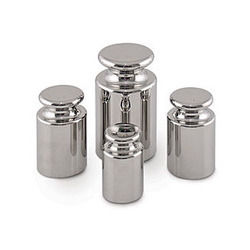

Price:
- 50
- 100
- 200
- 250
- 500
- 1000+

More Products in Laboratory Scale Category
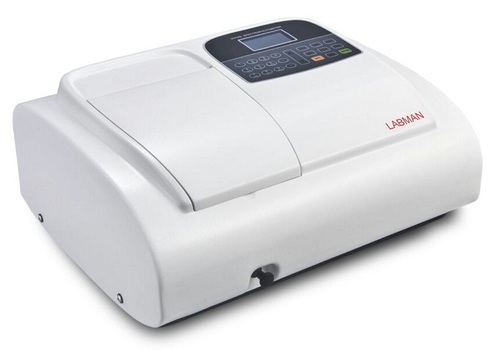
Digital Spectrophotometer
Price 255000 INR / Unit
Minimum Order Quantity : 1 Unit
Usage : Laboratory, analytical, research purposes
Automation Grade : SemiAutomatic
Response Time : 1 second
Humidity : Less than 85% RH
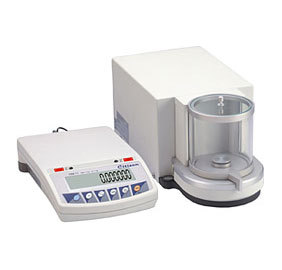
Laboratory Balance
Price 17000 INR
Minimum Order Quantity : 10 Units
Usage : Laboratory Weighing
Automation Grade : Semiautomatic
Response Time : ~2 seconds
Humidity : 15% 80% RH
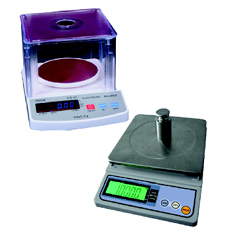
Weighing Balance
Price 20000 INR / Unit
Minimum Order Quantity : 1 Unit
Usage : Weighing solid or powder samples
Automation Grade : SemiAutomatic
Response Time : 2 Seconds
Humidity : 80% RH
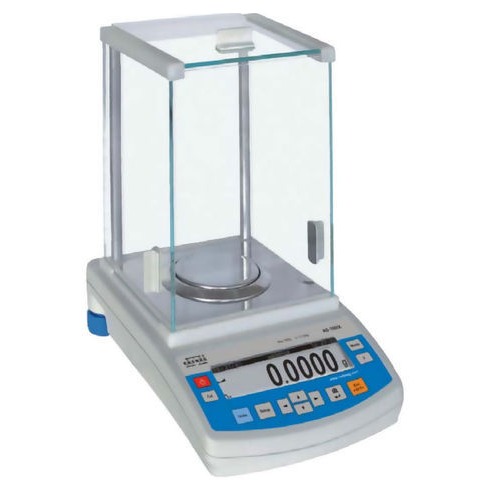
Laboratory Micro Balance
Price 100000 INR
Minimum Order Quantity : 1 Unit
Usage : Chemical/Pharmaceutical/Research Labs
Automation Grade : SemiAutomatic
Response Time : 35 seconds
Humidity : 40% to 80% RH (noncondensing)

GST : 07AGQPG8382B1Z8
 Send Inquiry




 |
SWASTIK SYSTEMS & SERVICES
All Rights Reserved.(Terms of Use) Developed and Managed by Infocom Network Private Limited. |
