
 English
 Spanish
 French
 German
 Italian
 Chinese (Simplified)
 Japanese
 Korean
 Arabic
 Portuguese



 Send Inquiry
Digital Polarimeter Labman ADP90
Price 380000 INR/ Number
Digital Polarimeter Labman ADP90 Specification
- Voltage
- 220V AC 10%, 50 Hz
- Capacity
- Sample Tube: 100 mm, 200 mm
- Application
- Chemical, Pharmaceutical, Food, Sugar industries
- Operate Method
- Automatic, Digital Display
- Usage
- Optical rotation measurement
- Material
- High-grade ABS Body with precision optics
- Power
- AC Adapter
- Classification
- Laboratory Instrument
- Dimension (L*W*H)
- 745 x 410 x 295 Millimeter (mm)
- Weight
- 42kg Kilograms (kg)
- Color
- white
- Product Type
- labman
- Accuracy
- 0.02
- Accessories
- 100 mm & 200 mm Sample Tube, Power Cord, Operation Manual
- Sample Chamber
- Stainless steel, corrosion resistant
- Ambient Temperature
- 10C to 35C
- Measuring Range
- -180 to +180
- Display Type
- Large LCD Digital Display
- Minimum Scale Value
- 0.01
- Lamp
- Sodium Lamp 589 nm
- Calibration
- Automatic or Manual
- Wavelength
- 589 nm
- Humidity
- 80% RH, non-condensing
Digital Polarimeter Labman ADP90 Trade Information
- Minimum Order Quantity
- 1 Number
- Supply Ability
- 2 Per Week
- Delivery Time
- 3 Week
About Digital Polarimeter Labman ADP90
Automatic Digital Polarimeter Salient Features| Touch screen colour display |
| Temperature display |
| Faraday magneto-optical modulator |
| Polarizer Polarizing film |
| Digital Polarimeter based on Optical null principle |
| No warm-up time is required when instrument is switched on |
| Measuring multiple scales - specific rotation, optical rotation, sugar degree and concentration |
| Automatic repetition-measurement for 6 times, and calculation of average value. |
| Measurement of dark-coloured sample |
| Response time 3sec |
| Insulated Sample chamber to keep sample temp. constant |
| User can set retesting sample between 1 to 6 |
| Photodiode Detector |
| Data display - date, time, measuring mode, length of tube, temp. test time, measured value (1 to 6 values) average value, |
| Purity method - saccharic concentration |
High Precision Measurement
Engineered for accuracy, the Labman ADP90 achieves 0.02 precision and delivers readings with a minimum scale value of 0.01. Its advanced optics and sodium lamp (589 nm) ensure reliable optical rotation results, making it suitable for sensitive analysis in laboratories.
User-Friendly Digital Interface
The large LCD digital display provides clear and immediate access to measurement data, making operation straightforward even for first-time users. With automatic and manual calibration modes, users benefit from flexible and efficient workflow management.
Durable Construction for Demanding Labs
A stainless steel, corrosion-resistant sample chamber and high-grade ABS body guarantee durability, even in rigorous work environments typical of chemical, pharmaceutical, food, and sugar industries. The instrument is designed to withstand regular laboratory use and ensures long-term reliability.
FAQ's of Digital Polarimeter Labman ADP90:
Q: How is the Digital Polarimeter Labman ADP90 calibrated?
A: The ADP90 supports both automatic and manual calibration methods. It is recommended to calibrate the device periodically or whenever measurement accuracy must be verified, ensuring consistent performance for laboratory applications.Q: What samples can be analyzed using the Labman ADP90?
A: This polarimeter is designed for optical rotation measurement in chemical, pharmaceutical, food, and sugar industries. It can measure solutions such as sugar syrups, pharmaceuticals, and chemical substances in a 100 mm or 200 mm sample tube.Q: When should I use the 100 mm versus the 200 mm sample tube?
A: The 100 mm and 200 mm sample tubes offer versatility depending on sample concentration and sensitivity requirements. Use the 100 mm tube for more concentrated solutions and the 200 mm tube for dilute samples needing enhanced sensitivity.Q: Where should the ADP90 polarimeter be installed for optimal use?
A: Install the instrument in a laboratory environment with ambient temperatures between 10C and 35C and humidity below 80% RH (non-condensing). Ensure the workspace is stable and vibration-free for accurate measurements.Q: What is the benefit of using a sodium lamp at 589 nm in this instrument?
A: The sodium lamp at 589 nm provides a stable and monochromatic light source, crucial for precise optical rotation measurements, as it minimizes wavelength-related discrepancies and enhances result reproducibility.Q: How do I maintain and clean the sample chamber?
A: The sample chamber is made of corrosion-resistant stainless steel, allowing easy cleaning. After use, rinse the chamber and sample tubes with appropriate solvents, and dry thoroughly to avoid contamination and maintain measurement accuracy.Q: What advantages does a digital display offer compared to analog models?
A: The large LCD digital display presents data clearly and eliminates estimation errors common with analog readings. This feature improves efficiency, reduces operator error, and supports data recording for laboratory documentation.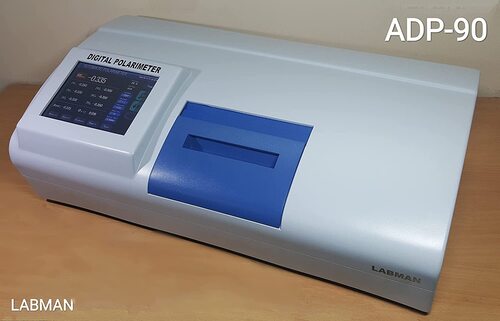

Price:
- 50
- 100
- 200
- 250
- 500
- 1000+

More Products in Scientific & Laboratory Instrument Category
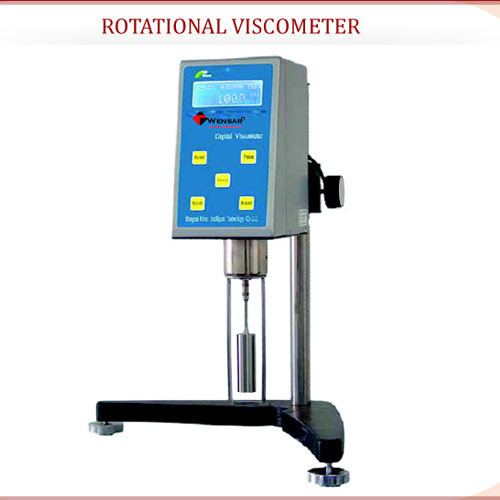
Labman Rotational Viscometer LMDV-60
Price 72000 INR / Unit
Minimum Order Quantity : 1 Unit
Capacity : 102,000,000 mPas
Application : Laboratory, Research, Industrial Viscosity Testing
Operate Method : Digital Control with Touch Keys
Material : Metal Body with Plastic Panel
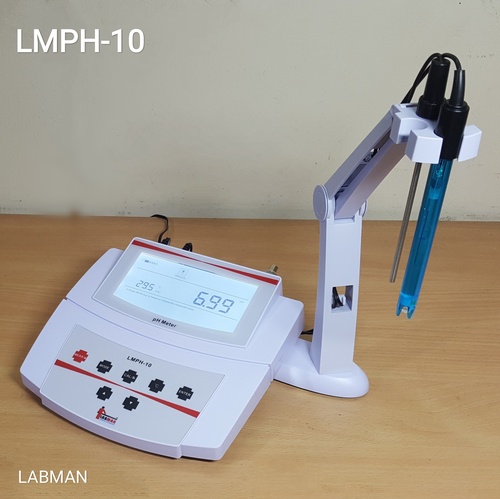
PH Transmitter Meter
Price 15000 INR / Number
Minimum Order Quantity : 1 Number
Capacity : Designed for continuous monitoring
Application : Water treatment, Laboratory, Industrial Processes
Operate Method : Digital Display, Keypad Operation
Material : ABS Plastic Body
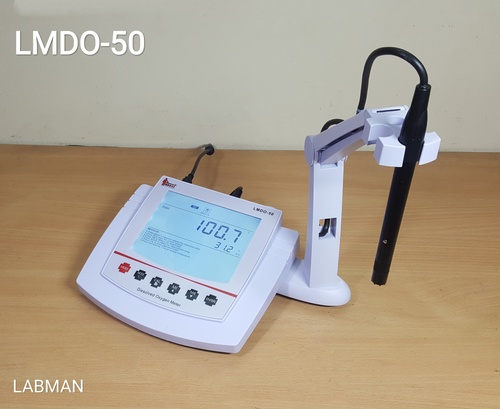
Digital DISSOLVED OXYGEN METER
Price 60000 INR / Number
Minimum Order Quantity : 1 Number
Capacity : 020.00 mg/L O2 range
Application : Water quality analysis, laboratory, research, aquaculture
Operate Method : Manual (push button and rotary knob controls)
Material : ABS plastic and electronic components
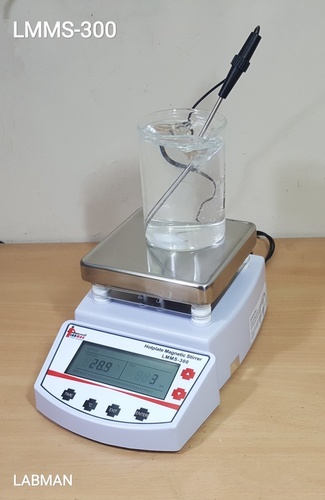
Hotplate Magnetic Stirrer
Price 16000 INR / Number
Minimum Order Quantity : 1 Number
Capacity : Up to 2 Liters
Application : Chemical, Pharmaceutical, Research Laboratories
Operate Method : Manual Knob Control
Material : MS Sheet with powder coated body and ceramic/mild steel top

GST : 07AGQPG8382B1Z8
 Send Inquiry




 |
SWASTIK SYSTEMS & SERVICES
All Rights Reserved.(Terms of Use) Developed and Managed by Infocom Network Private Limited. |
