
 English
 Spanish
 French
 German
 Italian
 Chinese (Simplified)
 Japanese
 Korean
 Arabic
 Portuguese



 Send Inquiry
Belt Scale & Weigh Feeder
MOQ : 1 Unit
Belt Scale & Weigh Feeder Specification
- Power Source
- Electric
- Usage
- Industrial Material Handling
- Application
- Cement, Power Plant, Steel Plants, Mining, Fertilizer, Bulk Materials
- Size
- Customized as per Conveyer Belt
- IP Rating
- IP65
- Features
- Auto Tare, Totalization, Alarms, Overload Protection
- Display Type
- Digital
- Function
- Continuous Weighing and Feeding
- Connectivity Type
- Wired
- Battery Life
- Not Applicable (Mains Powered)
- Interface
- RS232/RS485, 4-20mA Analog Output
- Automatic Grade
- Automatic
- Product Type
- Belt Scale & Weigh Feeder
- Weighing Scale Type
- Laboratory Balance
- Material
- Plastic
- Power Supply
- 220V
- Monitor Display
- Digital
- Load
- Up to 1000 TPH (Tons Per Hour)
- Accuracy
- ±0.5% to ±1%
- Capacity Range
- Varies as per application, typically 1 TPH to 3000 TPH
- Color
- Industrial Grey
- Conveyor Belt Width
- 300 mm to 2200 mm as per specification
- Mounting Type
- Belt Conveyor Mounted
- Operating Temperature
- -10°C to +60°C
- Speed Sensing
- Digital Encoder or Proximity Switch
- Drive Motor
- Available as per Application
- Structure
- Robust Steel Frame
- Protection Class
- IP65 Electronics Enclosure
- Software Compatibility
- SCADA, Plant Automation Systems
- Overload Protection
- Yes
- Calibration
- Electronic and Test Weight Calibration Provided
- Control Panel
- Microprocessor Based
- Data Logging
- Available with USB/Ethernet
Belt Scale & Weigh Feeder Trade Information
- Minimum Order Quantity
- 1 Unit
- Supply Ability
- Unit
- Delivery Time
- Days
Belt Scale & Weigh Feeder About
Belt Scales & Weigh Feeders
We are the leading manufacturer of conveyor belt scales for various industries including but not limited to aggregates, mining, portable crushing, scrap, and agriculture. The Belt-Way Conveyor Belt Scale features an easy to install, modular design. Our state of the art, in-motion weighing system delivers outstanding accuracy and unmatched repeatability.
Our revolutionary belt scale controller allows you to increase the efficiency of your operation like never before. The operator can easily interact with multiple scales at the plant and the supervisor can monitor production from the office on a PC or handheld device.
Durability or accuracy? With most belt scales, you get one or the other. With the patented design of Rice Lake's rugged BCi belt scale, now you can get both. This belt scale is not only one of the most accurate in its class, it's built to last. Ideal for mining, quarries, bulk material blending, process control operations, and truck/barge/rail load-out applications, the BCi easily handles capacities up to 10,000 tons per hour with unsurpassed accuracy.
The BCi's innovative integrator fits a wide variety of applications - from simple inventory reporting to automated load-out. This durable belt scale is capable of delivering real-time statistical data through a variety of wired, fiber optic and wireless network options. The robust processing power and expanded networking capabilities enable the integrator to easily communicate with printers, PCs, remote displays, ERP systems, PLCs, and other peripheral equipment.
We are the leading manufacturer of conveyor belt scales for various industries including but not limited to aggregates, mining, portable crushing, scrap, and agriculture. The Belt-Way Conveyor Belt Scale features an easy to install, modular design. Our state of the art, in-motion weighing system delivers outstanding accuracy and unmatched repeatability.
Our revolutionary belt scale controller allows you to increase the efficiency of your operation like never before. The operator can easily interact with multiple scales at the plant and the supervisor can monitor production from the office on a PC or handheld device.
Durability or accuracy? With most belt scales, you get one or the other. With the patented design of Rice Lake's rugged BCi belt scale, now you can get both. This belt scale is not only one of the most accurate in its class, it's built to last. Ideal for mining, quarries, bulk material blending, process control operations, and truck/barge/rail load-out applications, the BCi easily handles capacities up to 10,000 tons per hour with unsurpassed accuracy.
The BCi's innovative integrator fits a wide variety of applications - from simple inventory reporting to automated load-out. This durable belt scale is capable of delivering real-time statistical data through a variety of wired, fiber optic and wireless network options. The robust processing power and expanded networking capabilities enable the integrator to easily communicate with printers, PCs, remote displays, ERP systems, PLCs, and other peripheral equipment.
Advanced Weighing Technology
Equipped with a microprocessor-based control panel and digital speed sensing, the Belt Scale & Weigh Feeder ensures high-accuracy measurement and real-time monitoring. The robust electronics enclosure offers IP65 protection, guaranteeing reliability even in harsh industrial environments.
Seamless Integration and Connectivity
This system integrates effortlessly with existing plant automation via RS232/RS485, 4-20mA analog outputs, and supports SCADA compatibility for remote operation. Data logging is available through USB and Ethernet, enabling easy capture and review of critical measurement data.
Tailored for Industrial Demands
Engineered for a capacity range from 1 TPH to 3000 TPH and customizable to specific conveyor widths, this feeder is adaptable to a wide variety of material types and plant layouts. Its rugged steel frame and automatic features such as auto tare and overload protection ensure reliable operation and ease of use.
FAQ's of Belt Scale & Weigh Feeder:
Q: How does the Belt Scale & Weigh Feeder ensure measurement accuracy?
A: The feeder achieves accuracy within 0.5% to 1% using digital signal processing in its microprocessor-based control panel, robust load cells, and digital speed sensing (encoder or proximity switch). Regular calibration via electronic or test weights helps maintain these precision levels.Q: What types of industrial environments are suitable for installing this unit?
A: Designed for challenging settings, the system's steel structure and IP65-rated electronics enclosure allow installation in cement plants, power plants, mining operations, steel facilities, and bulk material handling environments-indoors or outdoors-within -10C to +60C.Q: When is calibration required for optimal performance?
A: Calibration is recommended during installation, after any mechanical maintenance, and periodically as prescribed in the product manual. Both electronic and test weight calibration options are available for ongoing accuracy.Q: Where can I access data logs from the weigh feeder?
A: Data logs are easily accessible through USB or Ethernet connections provided on the control panel. The system supports direct interfacing with SCADA and automation software for centralized data management.Q: What is the process for integrating the weigh feeder into an automated plant system?
A: Integration involves connecting the feeder's standard interfaces (RS232/RS485, 4-20mA) to the plant's automation or SCADA system. Compatibility with widely used industrial protocols ensures seamless operation within existing control architectures.Q: How does overload protection benefit operations?
A: The built-in overload protection feature safeguards the feeder's load cells and electronics against excessive loads, minimizing downtime and preventing costly equipment damage in high-throughput environments.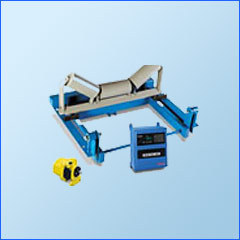
Tell us about your requirement

Price:
Quantity
Select Unit
- 50
- 100
- 200
- 250
- 500
- 1000+
Additional detail
Mobile number
Email

More Products in Industrial Scale Category
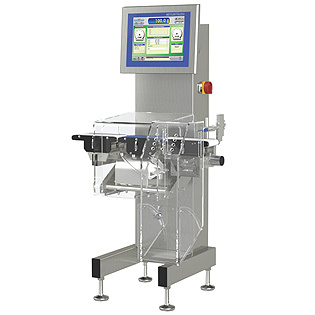
Static Check weigher
Price Range 4000.00 - 12000.00 INR
Minimum Order Quantity : 10 Units
Product Type : Static Check Weigher
Accuracy : 1g
Power Supply : 220V
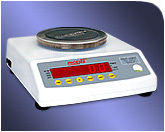
Industrial Balance
Price 20000 INR
Minimum Order Quantity : 1 Unit
Product Type : Industrial Balance
Accuracy : 0.1 kg
Power Supply : 220V
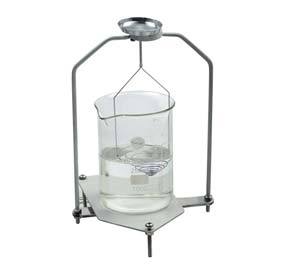
Density Determination Kit
Price 11000 INR / Unit
Minimum Order Quantity : 1 Unit
Product Type : Density Determination Kit
Accuracy : 0.001 g (balancedependent)
Power Supply : 220V
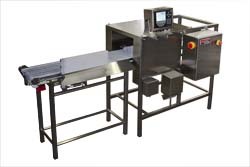
In Motion Check Weigher
Price Range 4000.00 - 12000.00 INR
Minimum Order Quantity : 10 Units
Product Type : In Motion Check Weigher
Accuracy : 0.1 g
Power Supply : 220V

SWASTIK SYSTEMS & SERVICES
GST : 07AGQPG8382B1Z8
GST : 07AGQPG8382B1Z8
An ISO 9001-2015 Company,
B-36/8, Block-B, Jhilmil Industrial Area,
ShahdaraDelhi - 110095, India
Phone :91-89203-23592
Mr Dayanand Gupta
(Managing Director)
Mobile :+919810895623, +919599388861, +918448313665
 Send Inquiry




 |
SWASTIK SYSTEMS & SERVICES
All Rights Reserved.(Terms of Use) Developed and Managed by Infocom Network Private Limited. |
