
 English
 Spanish
 French
 German
 Italian
 Chinese (Simplified)
 Japanese
 Korean
 Arabic
 Portuguese


 Send Inquiry
Digital DISSOLVED OXYGEN METER
Price 60000 INR/ Number
Digital DISSOLVED OXYGEN METER Specification
- Weight
- 1.5 kg Kilograms (kg)
- Color
- white
- Dimension (L*W*H)
- 210 X 188 X 60 Millimeter (mm)
- Classification
- Electronic Laboratory Equipment
- Material
- ABS plastic and electronic components
- Product Type
- labman
- Voltage
- 220V AC, 50 Hz
- Application
- Water quality analysis, laboratory, research, aquaculture
- Operate Method
- Manual (push button and rotary knob controls)
- Capacity
- 0-20.00 mg/L O2 range
- Power
- AC supply
- Usage
- For measuring dissolved oxygen levels in liquids
- Calibration
- Manual (air and zero point)
- Display Type
- Digital LED/LCD display
- Storage Humidity
- 85% RH
- Sensor Type
- Polarographic DO probe
- Accessories Included
- DO probe, membrane caps, electrolyte solution, instruction manual, connecting cables
- Temperature Compensation
- Automatic / Manual
- Measurement Range
- 0-20 mg/L (O2)
- Resolution
- 0.01 mg/L
- Accuracy
- 0.1 mg/L
- Operating Temperature
- 0C to 50C
Digital DISSOLVED OXYGEN METER Trade Information
- Minimum Order Quantity
- 1 Number
- Supply Ability
- 1 Number Per Week
- Delivery Time
- 1 Week
About Digital DISSOLVED OXYGEN METER
Dissolved Oxygen Meter:-
Other Details:
One or Two points calibration (100% in air, 0% in zero oxygen solution)
Automatic temperature compensation for best accuracy under fluctuating temperatures
Automatically compensates salinity and barometric pressure after manual input for increased accuracy
Automatic message prompts help your easy to operate meter
Expanded memory stores and recalls up to 99 data sets
USB Communication interface can be sent data to computer
High-Precision Measurement for Critical Applications
The Digital Dissolved Oxygen Meter guarantees dependable oxygen concentration readings for applications in research, laboratory testing, water treatment, and aquaculture. Its advanced sensor and user-friendly interface ensure efficiency and reliability, vital for maintaining optimal water quality standards.
Simple Operation and Comprehensive Accessories
Featuring manual controls via push buttons and rotary knobs, this meter simplifies operation for professionals and beginners alike. It arrives complete with a polarographic DO probe, membrane caps, electrolyte solution, and all essential cables, providing a seamless and immediate start.
Rugged and User-Friendly Design
Crafted from ABS plastic and engineered for everyday laboratory use, the meter is both durable and light, weighing just 1.5 kg. Its digital display is easy to read, while its compact build ensures it fits well in any setting. The meter supports both automatic and manual temperature compensation to meet a variety of operational needs.
FAQ's of Digital DISSOLVED OXYGEN METER:
Q: How does the Digital Dissolved Oxygen Meter work?
A: The meter operates by using a polarographic DO probe, which measures dissolved oxygen levels in liquids. The probe senses the oxygen present, and the device displays the precise concentration on its digital LED/LCD screen.Q: What is the process for calibrating the device?
A: Calibration is performed manually using air and zero point references. Follow the instruction manual to carry out air and zero calibration, ensuring optimal measurement accuracy before each use.Q: When should I use automatic versus manual temperature compensation?
A: Automatic temperature compensation is ideal for routine measurements to ensure accuracy despite fluctuating temperatures. Use manual compensation when more precise adjustments are required for specific conditions or validation purposes.Q: Where can this oxygen meter be applied?
A: The meter is suitable for water quality analysis in laboratories, research facilities, aquaculture farms, and any environment where dissolved oxygen monitoring is essential to process control.Q: What are the benefits of using this dissolved oxygen meter for water quality analysis?
A: Users benefit from its high accuracy, easy digital readout, and reliable results, making it a vital instrument for ensuring aquatic health and compliance with environmental standards.Q: How should the device be stored and maintained?
A: Store the meter at humidity levels below 85% RH and temperatures between 0C to 50C. Rinse the DO probe after each use and maintain the membrane caps and electrolyte solution as recommended in the manual to ensure longevity.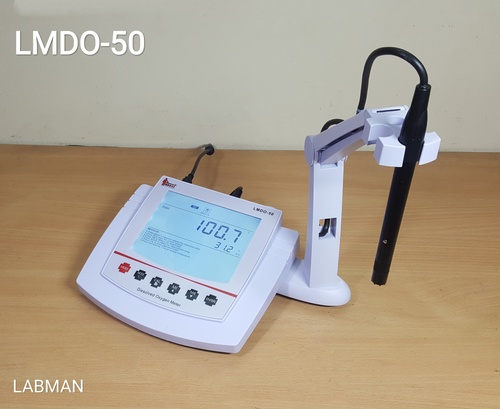

Price:
- 50
- 100
- 200
- 250
- 500
- 1000+

More Products in Scientific & Laboratory Instrument Category
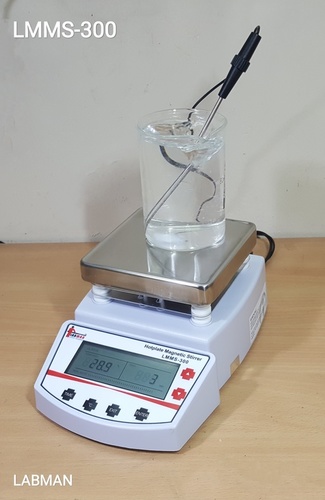
Magnetic Stirrer
Price 16500 INR / Unit
Minimum Order Quantity : 1 Unit
Power : AC 220V Volt (v)
Usage : Lab, College etc
Dimension (L*W*H) : 230 x 180 x 120 Millimeter (mm)
Voltage : 50 Hz Volt (v)
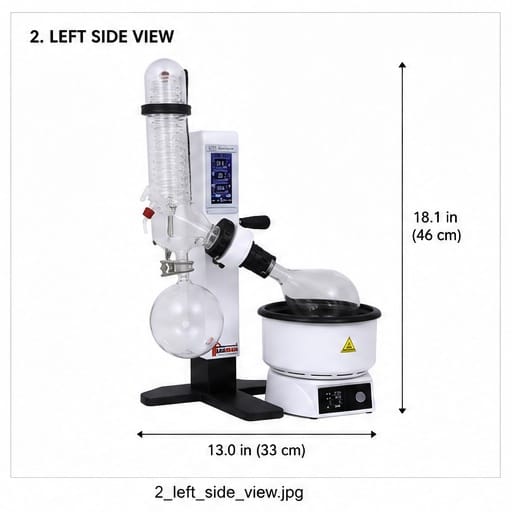
Rotary Evaporator LMRE2VC
Price 172500.0 INR / Piece
Minimum Order Quantity : 1 Piece
Power : AC 220V,50/60Hz Watt (w)
Usage : Laboratory Solvent Evaporation,
Dimension (L*W*H) : 770x610x765 Millimeter (mm)
Voltage : 220 Volt (v)
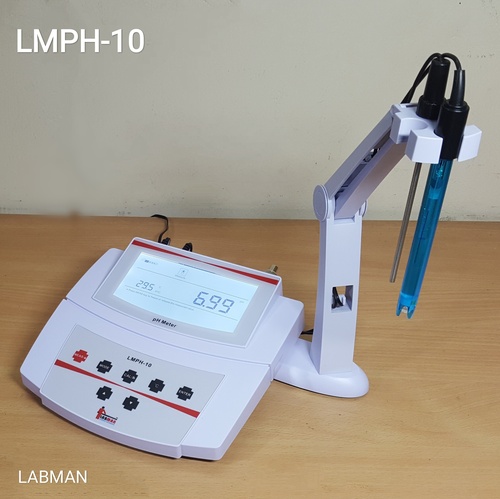
Portable PH Meter
Price 15000 INR / Number
Minimum Order Quantity : 1 Number
Power : Battery Operated (2 x AAA batteries)
Usage : Measure pH of solutions
Dimension (L*W*H) : 185 x 40 x 48 mm
Voltage : 3V
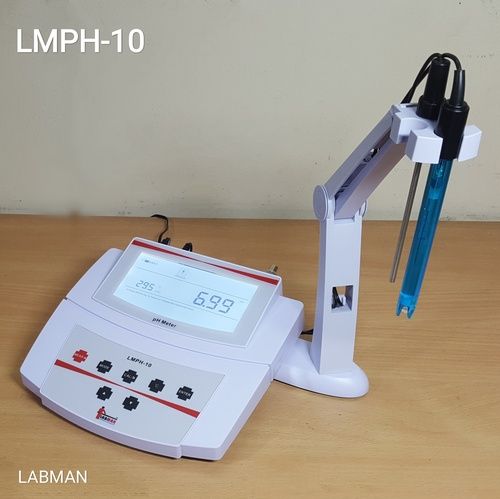
Labman Digital pH Meter
Price 15000 INR / Number
Minimum Order Quantity : 1 Number
Power : Electric
Usage : pH Measurement
Dimension (L*W*H) : 210 205 75 Millimeter (mm)
Voltage : 220 V AC

GST : 07AGQPG8382B1Z8
 Send Inquiry



 |
SWASTIK SYSTEMS & SERVICES
All Rights Reserved.(Terms of Use) Developed and Managed by Infocom Network Private Limited. |
